Endometriosis and Perimenopause: The collision that needs a warning

By Sandra Ishkanes, Functional Medicine Practitioner, specialising in perimenopause and menopause.
BSc, MA, DipION
When two oestrogen-driven conditions meet, the result is not relief — it is amplification. Progesterone Shift lands on lesion tissue that already produces its own oestrogen via local aromatase and is structurally resistant to progesterone — a double hit to the same imbalanced hormonal axis. For many women, perimenopause is the hardest chapter of the disease, and navigating it requires clinical support that addresses the hormonal terrain
For fifteen years, Sarah had learned to work around her endometriosis: the two days in bed each month, the heating pad, the strategic cancellations. She had been told, more than once, that menopause would eventually bring relief — that as oestrogen declined, her lesions would quiet, her body would settle. So when she turned 42 and everything got worse — flooding so heavy she cancelled meetings, pain radiating into her thighs, migraines arriving like clockwork in the week before her period, breast tenderness so severe she couldn’t sleep on her front — she assumed something new must be wrong.
Nothing new was wrong. What was happening to her was entirely predictable, and entirely biological. She had arrived at the intersection of two oestrogen-sensitive conditions at precisely the moment when the hormonal landscape shifted in a direction that fed both of them.
This article is about that intersection: why endometriosis and perimenopause collide the way they do, why symptoms often escalate rather than improve in the early transitional years, and what the actual science says about the two questions women with endometriosis most frequently ask — does it get worse before it gets better? and does it finally go away after menopause?
Why Endometriosis Doesn’t Follow the “Relief at Menopause” Script
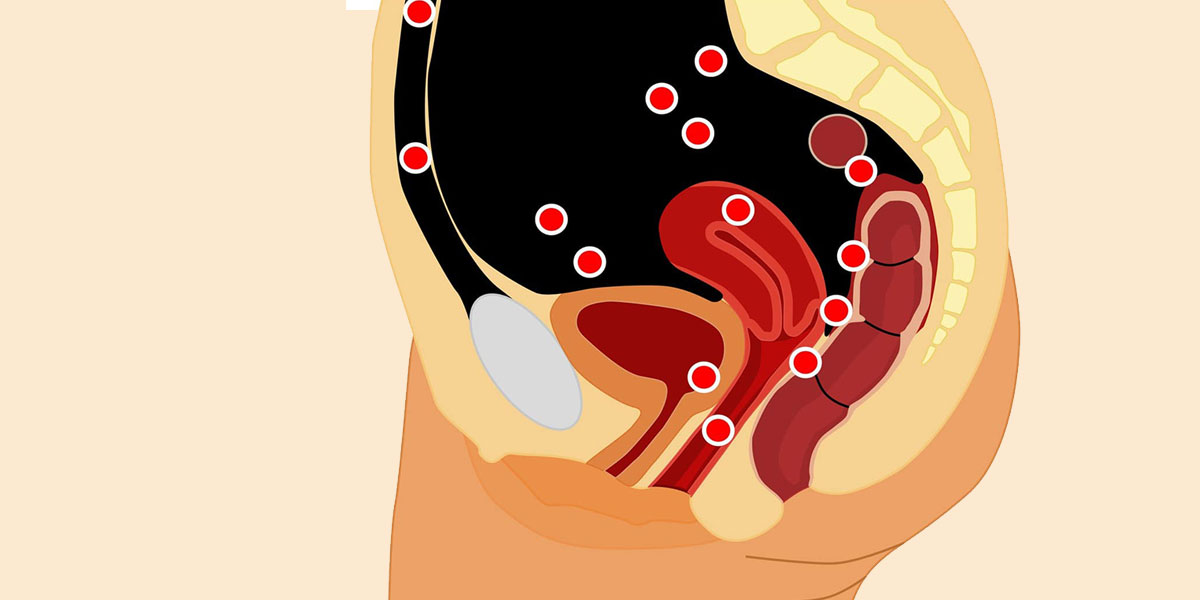
Endometriosis is, at its core, an oestrogen-dependent condition. The misplaced tissue — growing on ovaries, bowel, bladder, pelvic ligaments, and occasionally further afield — is stimulated by oestrogen and suppressed, partially, by progesterone. This is why the conventional clinical story runs: oestrogen falls at menopause, lesions starve of their stimulus, symptoms resolve.
For a proportion of women, that story is true. But for a significant number — and particularly those entering perimenopause with a substantial lesion burden, persistent inflammation, or a history of surgical treatment that did not achieve complete excision — the story is considerably more complicated.
Two facts undermine the simple “oestrogen falls, endo quiets” narrative.
First, perimenopause does not begin with oestrogen falling. It begins with progesterone falling — often years before oestrogen changes meaningfully. This distinction is fundamental, and it is the reason many women with endometriosis experience a worsening of symptoms in their early-to-mid 40s that has nothing to do with approaching menopause bringing relief, and everything to do with it beginning.
Second, endometriotic lesions are not passively dependent on ovarian oestrogen. Research has established that lesions express the enzyme aromatase (encoded by the CYP19A1 gene), enabling them to produce oestrogen locally, within their own tissue microenvironment — partially independent of what the ovaries are doing. A 2022 systematic review by Mercorio et al. documented this intracrine activity in detail, describing a self-sustaining positive feedback loop in which local oestradiol production drives COX-2 activity, COX-2 increases prostaglandin E2 (PGE2), and PGE2 in turn stimulates further aromatase activity. The lesion, in other words, has partial capacity to fuel itself.
This is why the epidemiology does not match the clinical promise. Studies report that between 2% and 4% of postmenopausal women have confirmed, active endometriosis — with Matalliotakis et al. (2019) finding active disease in 4.2% of their surgical endometriosis cohort past menopause, and Haj Hamoud et al. (2024) and Secoșan et al. (2020) confirming that postmenopausal presentation, while less common, is a well-recognised clinical entity. Postmenopausal endometriosis also carries an elevated risk of malignant transformation — particularly to clear cell and endometrioid ovarian cancer — making this far from a benign oversight.
The reality, then, is not that endometriosis defies menopause. It is that the transition itself, and the biology of the lesions, interact in ways the conventional narrative simply does not account for.
The Progesterone Shift and the Double Hit
To understand why symptoms often escalate in perimenopause, it helps to understand what perimenopause actually is at the hormonal level — and the answer is not what most women have been told.
What the Progesterone Shift actually is
Early perimenopause is not, in its first phase, a story about oestrogen deficiency. It is a story about ovulation failure. As women move through their late 30s and early 40s, the pool of available follicles diminishes and — critically — the ovarian cortex becomes less responsive to FSH signals. When a follicle fails to develop fully and release an egg, there is no corpus luteum. Without a corpus luteum, there is no progesterone surge in the second half of the cycle.
The result is a progesterone crash — not an oestrogen crash. Oestrogen, produced in the first half of the cycle by developing follicles, may remain relatively normal or even fluctuate higher during this phase. The progesterone:oestrogen ratio tips sharply in oestrogen’s favour.
I refer to as the Progesterone Shift — the earliest hormonal disruption of the menopausal transition. It is not oestrogen excess in absolute terms; it is an imbalanced ratio between two hormones that work in counterpoint to one another. Progesterone ordinarily moderates oestrogen’s proliferative effects on the endometrium, the breast, and other oestrogen-sensitive tissue. When progesterone falls away, that moderating influence is lost — even if oestrogen levels are not dramatically elevated.
Symptoms of this phase include: irregular or heavier periods, worsening PMS, cyclical migraines, breast tenderness, bloating, mood changes in the luteal phase, and sleep disruption. Women in their early 40s presenting with these symptoms are frequently told they are too young to be perimenopausal — but the Progesterone Shift can begin a decade before the final menstrual period.
Why this is a double hit for women with endometriosis
Here is where the biology becomes clinically important: women with endometriosis enter the Progesterone Shift with tissue that is already primed to exploit exactly this kind of hormonal imbalance.
Aromatase in lesions amplifies systemic oestrogen dominance. As the Progesterone Shift tilts the ratio toward a relative oestrogen excess, the lesions’ own aromatase activity adds a further source of oestrogen production — locally, within the pelvis. The systemic ratio worsens, and local oestrogen exposure in the pelvic cavity worsens simultaneously. Two distinct oestrogen-driving mechanisms operate in parallel. Mercorio et al. (2022) characterise this intracrine activity as creating a hyperoestogenic microenvironment that sustains both inflammatory signalling and cell proliferation within the lesions themselves.
Progesterone resistance means the one moderating hormone cannot do its job. Under normal physiology, progesterone — even the reduced amounts produced in perimenopausal cycles — would exert some moderating influence on oestrogen-sensitive tissue. In endometriotic lesions, this moderating effect is specifically disabled. Research has documented that lesion cells undergo epithelial-mesenchymal transition (EMT), with upregulation of the transcription factors SNAI1 and SNAI2, which in turn downregulate progesterone receptor (PR) expression. Tang et al. (2024), MacLean and Hayashi (2022), and Ma et al. (2021) have each described this progesterone resistance mechanism in detail: the lesions are structurally unable to respond to progesterone even when it is present in the circulation.
The implication for perimenopause is direct: as progesterone declines, its moderating effect was already impaired. The Progesterone Shift does not just reduce progesterone — it removes a moderating influence that the lesions were already resistant to. It is, in the most precise sense, a double hit:
- The systemic oestrogen:progesterone ratio deteriorates (Progesterone Shift)
- The tissue that responds to that imbalance is already resistant to the one hormone that would moderate it (progesterone resistance)
This is why women with endometriosis frequently report a sudden and alarming escalation of symptoms in their early-to-mid 40s. The experience is real, and it has a precise biological cause. It is not anxiety, it is not coincidence, and it is not an unrelated condition appearing at an inconvenient time. It is the Progesterone Shift landing on tissue that was already dysregulated.
Understanding the Progesterone Shift
The hormonal disruption that drives early perimenopause begins at the ovary — not with oestrogen falling, but with ovulation failing. When follicles can no longer respond adequately to FSH signals, the corpus luteum never forms, progesterone crashes, and an imbalanced oestrogen:progesterone ratio sets in. For women with endometriosis, this shift lands on tissue already primed to respond to oestrogen and already resistant to the moderating effect of progesterone.
How Endometriosis Shapes the Perimenopause Experience
The relationship between endometriosis and perimenopause is bidirectional. The Progesterone Shift changes how endometriosis behaves — but endometriosis also changes how perimenopause unfolds. Women with the condition do not just experience the transition more severely; they carry biological baggage from years of disease that actively compounds the hormonal disruption.
Iron overload silences progesterone receptors further
Endometriosis is characterised by chronic, repeated bleeding into the pelvic cavity. This haemorrhage deposits iron in the peritoneal environment. Excess iron drives DNA hypermethylation — an epigenetic mechanism that directly silences gene expression, including the genes encoding progesterone receptors. The result is a progressive, cumulative reduction in the tissue’s capacity to respond to progesterone over time. Women who have had endometriosis for two decades by the time they enter perimenopause may have substantially more profound progesterone resistance than younger women with the condition — not because their disease is inherently more severe, but because chronic iron exposure has progressively silenced the receptor pathways that progesterone relies on.
The estrobolome: disrupted oestrogen clearance
The gut microbiome plays a direct role in oestrogen metabolism through a community of bacteria collectively termed the estrobolome. These bacteria produce beta-glucuronidase, an enzyme that cleaves oestrogen conjugates in the gut, determining whether deactivated oestrogen is excreted or returned to circulation. Endometriosis is associated with gut dysbiosis — an imbalance in the microbial community — which can lead to overactivity of beta-glucuronidase and increased reabsorption of oestrogen. Rather than clearing efficiently through the bowel, oestrogen recirculates, adding to the systemic oestrogenic load. During the Progesterone Shift, when the ratio is already imbalanced, this recirculation worsens the oestrogen:progesterone disproportion further. A woman entering perimenopause with both endometriosis and gut dysbiosis is carrying a significantly higher systemic oestrogenic burden than her hormonal bloodwork alone might reveal.
Chronic inflammation as an amplifier
Endometriosis is not simply a structural condition — it is a chronic inflammatory disease. Lesions are surrounded by activated immune cells, elevated cytokines, and persistent prostaglandin production. Perimenopause itself involves an increase in systemic inflammatory signalling as the modulating effect of cyclical progesterone decreases. The two inflammatory substrates — one disease-driven, one transition-driven — amplify one another. Women with endometriosis who enter perimenopause with an already-elevated inflammatory baseline may experience the transition’s associated symptoms (fatigue, joint aching, mood changes, sleep disruption) with considerably more intensity than women without the condition.
This bidirectionality matters clinically because it means addressing only the hormonal layer — or only the endometriosis layer — will produce incomplete results. The conditions cannot be cleanly separated in the body. They need to be understood, and addressed, together.
The HRT Question — Why It Is More Complicated with Endometriosis
Women with endometriosis who reach perimenopause will, at some point, encounter the suggestion that hormone replacement therapy (HRT) offers a straightforward solution to their escalating symptoms. The evidence base does not support the framing of HRT as a simple, low-risk intervention in this population.
Oestrogen-only HRT reactivates lesions
There is consistent clinical evidence that oestrogen-only HRT can reactivate endometriotic lesions in postmenopausal women. Gemmell et al. (2017) and Hirschberg et al. (2023) both document reactivation of previously quiescent disease in postmenopausal women commenced on oestrogen therapy — including cases requiring repeat surgical intervention. For women considering HRT after natural menopause or surgical menopause with a history of endometriosis, this risk is material and should be part of an informed conversation.
Progestogen in HRT is not the same as progesterone
Many women are reassured that combined HRT — oestrogen plus a progestogen — provides adequate protection against oestrogen-dominant effects in the uterus and in endometriotic tissue. This assumption rests on an important category error.
The progestogens used in most HRT preparations (norethisterone, medroxyprogesterone acetate, levonorgestrel, and others) are synthetic compounds that bind progesterone receptors but do not replicate the full biological activity of endogenous progesterone. Critically, they do not convert to allopregnanolone — the neurosteroid metabolite of natural progesterone that is responsible for significant calming, anti-anxiety, and sleep-protective effects in the brain. The receptor binding profile of synthetic progestogens is also distinct from natural progesterone.
For women with endometriosis and established progesterone resistance in their lesions, this distinction is particularly significant. Progesterone resistance means the lesions have downregulated progesterone receptors. Even if synthetic progestogen binds to those reduced receptors, its moderating effect on the lesions is correspondingly limited. Combined HRT does not reliably suppress endometriotic lesions in the way that natural luteal-phase progesterone might — and given the structural resistance already present in the tissue, the progestogen component of HRT should not be assumed to provide confident lesion control.
Malignant transformation risk
Unopposed oestrogen exposure in women with endometriosis — including oestrogen-dominant HRT — is associated with an elevated risk of malignant transformation of endometriotic lesions, particularly to clear cell ovarian carcinoma and endometrioid ovarian carcinoma. Gemmell et al. (2017) review this risk and its clinical implications in detail. Postmenopausal endometriosis carries an inherently elevated cancer risk, and hormonal therapy that adds further oestrogenic stimulus requires careful individual assessment.
The position here is not that HRT is uniformly wrong for women with endometriosis. It is that this is a decision requiring considerably more nuance than the increasingly common “just add oestrogen” narrative allows. The risks are real, the biology is specific to this population, and women deserve an informed conversation rather than a categorical reassurance that HRT is safe because symptoms are real
Post-Menopause — Does It Finally Go Away?
After years — sometimes decades — of managing endometriosis, the question women most want answered is the simplest one: will menopause end it?
For many women, the answer is yes, or mostly yes. As ovarian oestrogen production ceases, the primary systemic driver of lesion activity is substantially reduced. Pain diminishes, cyclical symptoms resolve, and the condition enters a state of quiescence.
But for a meaningful minority, the story does not end there. Multiple studies confirm that active endometriosis persists in postmenopausal women. Matalliotakis et al. (2019) documented active disease in 4.2% of their surgical endometriosis cohort post-menopause. Haj Hamoud et al. (2024) and Secoșan et al. (2020) each confirm that postmenopausal endometriosis, though less prevalent, presents clinically with pain, pelvic masses, and — critically — a higher rate of malignant transformation than premenopausal disease.
The mechanism by which lesions remain active after menopause is precisely the aromatase activity described earlier. Lesions capable of producing their own intracrine oestrogen do not depend entirely on ovarian output for their continued activity. The positive feedback loop — aromatase → oestradiol → COX-2 → PGE2 → aromatase — sustains local oestrogenic stimulation even in a low-systemic-oestrogen environment. Mercorio et al. (2022) characterise this as a partially self-sustaining system.
This is precisely why aromatase inhibitors — medications that block the aromatase enzyme — are used as a targeted treatment for postmenopausal endometriosis. Hirschberg et al. (2023) and Gemmell et al. (2017) both document their use in postmenopausal cases where lesion activity persists, recognising that the target is the local oestrogen production within the lesion itself, not the ovarian source that has already ceased.
The practical implication: whether endometriosis resolves after menopause is an individual question, and the answer depends significantly on the lesion burden, the degree of aromatase activity in existing lesions, and the overall metabolic context — particularly insulin resistance and adipose tissue aromatase activity (since both contribute to peripheral oestrogen production in postmenopausal women). Waiting for menopause to resolve the condition is, for some women, a reasonable hope. For others, active management of the factors that sustain lesion activity needs to continue past the final menstrual period.
My Approach: Working with Both Conditions Simultaneously
The overlap between endometriosis and perimenopause is not two separate problems requiring two separate protocols. At the functional level, the shared driver — an imbalanced oestrogen:progesterone ratio, oestrogen dominance, and chronic inflammation — means that addressing the hormonal terrain addresses both simultaneously. This is the orientation that shapes clinical work in this area. I have written an indepth analysis of endometriosis drivers here.
Reducing systemic oestrogen dominance
The foundational work centres on improving the body’s capacity to process and clear oestrogen efficiently, and on reducing the metabolic inputs that generate excess oestrogenic activity.
Insulin optimisation. Insulin resistance is a significant driver of peripheral aromatase activity. Adipose tissue — particularly visceral adipose tissue — expresses aromatase and converts androgens to oestrone. In the context of the Progesterone Shift, insulin resistance worsens the relative oestrogen excess further. Blood sugar stabilisation through low-glycaemic nutrition, protein-forward meals, and reducing ultra-processed carbohydrates is not peripheral to this work — it is central to it.
Liver support (Phase I and II oestrogen clearance). The liver is responsible for converting oestradiol into less active forms (Phase I) and then conjugating those metabolites for excretion (Phase II). B vitamins — particularly B1, B2, and methylated folate — are essential cofactors for these pathways. Cruciferous vegetables (broccoli, cauliflower, Brussels sprouts, kale) support Phase II methylation pathways. When the liver is overburdened by environmental toxins, alcohol, medications, or nutrient deficiencies, oestrogen metabolites accumulate and recirculate.
Gut microbiome repair (estrobolome). Restoring microbial diversity reduces beta-glucuronidase overactivity and improves oestrogen excretion. Calcium D-glucarate directly inhibits beta-glucuronidase, reducing the reabsorption of conjugated oestrogens from the gut. This is a practical, targeted intervention for the estrobolome layer.
Xenoestrogen avoidance. Plastics (BPA and related compounds), synthetic fragrances, and many conventional personal care products contain endocrine-disrupting compounds that bind oestrogen receptors. Reducing environmental oestrogen exposure reduces the overall oestrogenic load on tissue that is already sensitised. 55d
dlv
]s\dksl]aly’4i3q3
The endometriosis-specific supplement layer
Layered on top of the oestrogen-dominance framework is a protocol specifically calibrated for endometriosis, drawing on the evidence base documented in my endometriosis management page:
- DIM (diindolylmethane) — derived from cruciferous vegetables; directly inhibits aromatase activity and supports 2-hydroxy oestrogen metabolism (the less proliferative pathway). Particularly relevant given the aromatase activity in endometriotic lesions.
- NAC (N-acetyl-cysteine) — reduces oxidative stress, inhibits pro-inflammatory cytokines (IL-6, IL-8, TNF-alpha), VEGF, and metalloproteinases. Clinical evidence demonstrates reduced chronic pelvic pain, reduced endometrioma size, and reduced CA-125 at 600 mg three times daily for three consecutive days per week over three months.
- IP6 (inositol hexaphosphate) — iron scavenger that reduces the free iron burden in the peritoneal cavity, directly addressing the iron-driven oxidative stress and receptor silencing described above.
- Quercetin — inhibits arachidonic acid production and reduces PGE2 and leukotriene formation; reduces endometrial lesion activity in research models.
- Vitamin E — inhibits PGE2 production via COX-2 suppression. A double-blind study found that vitamin E (1,200 IU/day) combined with vitamin C (1,000 mg/day) for eight weeks produced significant pain improvement in 43% of women, compared to none in the placebo group.
- Vitamin C — antioxidant and anti-inflammatory; combined with vitamin E as above.
- Melatonin — inhibits aromatase activity by blocking cholesterol conversion to androstenedione, reducing the substrate available for oestradiol production. A Phase 2 randomised clinical trial in 40 women demonstrated significant reduction in chronic pelvic pain and improved sleep quality.
- Vitamin D — COX-2 inhibitor and aromatase expression reducer; levels are consistently found to be low in women with endometriosis.
This protocol sits entirely within the broader Progesterone Shift work — addressing oestrogen dominance, inflammation, and metabolic disruption at the level of their shared drivers. There is no need to fragment care between “endo management” and “perimenopause management.” The terrain is the same terrain.
Case Study: Claire
Composite case
Claire had lived with endometriosis since her late 20s. She had reached a kind of hard-won equilibrium — the pain was present, but manageable; she knew her body, she knew her cycle, she knew what to avoid. At perimenopause, that equilibrium collapsed without warning. Over three consecutive cycles she developed flooding so heavy she was changing protection every hour, pain that returned to its original severity, cyclical migraines in the five days before her period, and severe breast tenderness. Her GP offered two options: HRT, or a Mirena coil.
What was actually happening was the Progesterone Shift arriving on top of tissue that had been primed for it for fourteen years. The aromatase activity in her lesions had been there throughout — but the ratio change that came with anovulatory cycles amplified its effect dramatically. Her progesterone resistance meant the small amounts of progesterone she was still producing had limited moderating effect.
Working through the oestrogen dominance layer — DIM, liver support, blood sugar stabilisation, gut microbiome repair — produced a meaningful reduction in symptoms within three cycles. By month three, flooding had reduced to manageable, the cyclical migraines had diminished in frequency and severity, and breast tenderness had largely resolved.
Work with me
If you are in your 40s, have a history of endometriosis, and are experiencing a sudden escalation of symptoms, this is a clinical picture that benefits from individual assessment.
FAQ’s
Does endometriosis get worse in perimenopause?
For many women, yes — particularly in the early perimenopause phase. Early perimenopause involves the Progesterone Shift: anovulatory cycles in which the corpus luteum never forms, progesterone production falls, and the oestrogen:progesterone ratio tips into imbalance. For women with endometriosis, this imbalanced ratio lands on tissue that is already oestrogen-sensitive and progesterone-resistant. The result is an amplification of symptoms that can be sudden and significant, typically beginning in the early-to-mid 40s.
Does endometriosis go away after menopause?
Oestrogen-only HRT has been documented to reactivate previously quiescent endometriotic lesions. Combined HRT (oestrogen plus progestogen) is often assumed to offer protection, but the synthetic progestogens in HRT preparations do not replicate the full biological activity of natural progesterone and, given progesterone resistance in endo tissue, do not reliably suppress lesion activity. There is also an elevated risk of malignant transformation — particularly clear cell and endometrioid ovarian cancer — in women with endometriosis exposed to unopposed or oestrogen-dominant HRT. These risks do not make HRT categorically unsafe, but they do make it a decision that requires informed, individualised assessment rather than a standard prescription.v
Why is progesterone resistance important in endometriosis?
Progesterone normally moderates oestrogen’s proliferative and inflammatory effects on sensitive tissue. In endometriotic lesions, a molecular process called epithelial-mesenchymal transition (EMT) upregulates transcription factors (SNAI1/2) that downregulate progesterone receptor expression. The lesions structurally lose their capacity to respond to progesterone. This matters for two reasons: first, it means progesterone cannot perform its normal anti-inflammatory, anti-proliferative function on the lesions even when it is present; second, it means the lesions are specifically vulnerable when progesterone levels decline, as they do during the Progesterone Shift. Progesterone resistance is not an abstract molecular finding — it is a central reason why endometriosis behaves as it does during perimenopause.
Can functional medicine help endometriosis in perimenopause?
Functional medicine offers a framework specifically suited to this overlap, because it addresses the shared underlying terrain: oestrogen:progesterone imbalance, aromatase activity, inflammation, insulin resistance, gut dysbiosis, and nutrient deficiencies — all of which drive both conditions simultaneously. Rather than managing endometriosis and perimenopause as separate problems, I work with the biological substrate they share. The evidence base for specific interventions — DIM, NAC, vitamin D, melatonin, gut microbiome support, blood sugar optimisation — is documented and clinically applicable.
Related
-
Uterine Fibroids: What They Are, Why They Grow and What Helps
Fibroids grow under oestrogen — and the usual answer to why yours are growing is a shrug. There’s a clearer picture: oestrogen dominance plus oxidative stress, amplified by insulin, alcohol,…
-
Manage Endometriosis Naturally, Reduce Pain and Inflammation
Endometriosis is an oestrogen-driven, inflammatory condition — and the inflammation (through a molecule called PGE2), the excess oestrogen, and the oxidative stress that keep it going are all things you…
-
PCOS in Perimenopause
Polycystic ovaries contain about twice as many small cysts as normal. These cysts are egg-containing follicles that have not developed properly. PCOS is the leading cause of infertility in women,…