By Sandra Ishkanes, Functional Medicine Practitioner, specialising in perimenopause and menopause.
BSc, MA, DipION
If you have come off HRT — by choice, or because you had to — and the symptoms have come flooding back, it’s because HRT was covering the symptoms, not resolving them; when it is withdrawn, the drivers underneath surface again. Here is why that happens, and how to settle them at the root so they stop returning.
You came off HRT. Perhaps you chose to — the side effects, a change of heart, or simply wanting to be free of it. Perhaps you had no choice — a diagnosis, a clot, a new reason it was no longer safe for you. And within days or weeks, the symptoms you thought were behind you came back — and after the relief, they can seem harder than before: the flushes, the broken nights, the fog, the low mood, the anxiety.
It can feel as though stopping was a mistake — or as though your body simply cannot manage without the hormone, and you are bound to HRT for good. You are not. What is happening has an explanation and a way through.
HRT was covering the symptoms, not resolving them
HRT extends oestrogen — it holds a level close to pre-menopause going for longer. Where a symptom follows closely from oestrogen falling, adding it back can quiet that symptom well. But quieting is not the same as resolving. The changes that menopause sets in motion — in how the body fuels itself, handles stress, and makes and clears its hormones — carry on underneath, whether or not oestrogen is topped up. HRT lays a cover over them. It does not undo them.
So when the cover is taken away, what was underneath is still there. The symptoms return not because stopping harmed you, and not because your body has grown dependent, but because the drivers that produced them in the first place were never addressed — only masked. That is the whole of it, and it is also the reason there is a way forward: the drivers can be worked on directly.
Why they come back
Symptoms returning after HRT is common. Around half of women who stop get their hot flushes back, and among those who had flushes before they ever started, it is the great majority [1]. The immediate reason is the oestrogen itself: the brain’s thermostat, in the hypothalamus, is sensitive to it, so when the steady supply comes away the thermostat is unsettled again and the flushes return — even in women who had been comfortable for years [2].
Stopping abruptly makes this sharp. The oestrogen that was held steady falls in days, so symptoms that once built up over months arrive together — and after a stretch of relief, the contrast can make them feel worse than you remember, even where they are no worse than they were before you started [1]. Coming off gradually, with your prescriber, softens that first wave, and is what the regulator advises [3].
But gradual or abrupt, the symptoms tend to return either way — tapering slowly postpones them rather than preventing them [2]. That is the tell. If the speed of stopping changes the timing but not the outcome, the symptoms were never really about the withdrawal. They were about what the HRT was covering — which is where the work has to go.
What was underneath all along
The symptoms that return are the same ones the rest of this work is about, driven by the same shifts. Menopause is really a sequence of them — the Progesterone Shift of early perimenopause, then the Energy, Oestrogen and Emotional shifts as oestrogen falls — and every symptom sorts into one:
- The flushes, night sweats, fog and broken sleep come from the Energy Shift — the brain’s fuel supply, blocked when insulin stays high. Oestrogen steadied the energy of the thermostat; take it away, and an unsteady metabolism tips it again.
- The low libido, flat drive, and aching joints sit on the Oestrogen Shift — the tissues’ own local oestrogen, built from adrenal DHEA, which HRT never restored.
- The anxiety, the short fuse, the sense of a nervous system running hot belong to the Emotional Shift — the stress axis, more reactive now, and never calmed by oestrogen in the first place.
I set these out in full, with what supports each, in Menopause Without HRT →. The point here is narrower: none of these was ever an oestrogen problem HRT had solved. They were held quiet. Once you can see which shift each symptom is running off, you can work on the driver rather than reach back for the cover.
Coming off well — so they do not keep returning
We can taper the dose of HRT, while addressing the drivers the HRT was covering — steadying blood sugar and insulin, easing the load on the stress axis and the adrenals, correcting what a blood panel shows is depleted, supporting the gut and the body’s own clearance of oestrogen. As those settle, your own systems are in a far stronger position to hold steady as the oestrogen comes down — so the symptoms are far less likely to come flooding back, because the thing that was producing them has been worked on, not just covered again.
This is the difference between stopping HRT and being left with the symptoms, and stopping HRT with the ground prepared underneath it.
Whether you chose to stop, or had to
If you chose to come off — because the side effects outweighed the benefit, or because you would rather move through this stage without it — the returning symptoms are the drivers surfacing, and they can be met.
If HRT was taken away from you — by a diagnosis or a new risk — you have the harder version: the symptoms are back and the option you relied on is closed. This work was made for exactly that position. It does not use hormones, so it does not carry the cautions that ruled HRT out, and it reaches the same symptoms by a different route — the drivers underneath. Anything you do still belongs alongside the care of the team who know your history.
Work with me
If you have come off HRT, or are planning to, and the symptoms are back or you are bracing for them, this is the work I do — not the medication, which stays with your prescriber, but the body beneath it: finding what was being covered, and settling it at the root, so coming off does not mean living with the symptoms again.
References
Lindh-Åstrand L, Nedstrand E, Spetz Holm A-C, et al. Vasomotor symptoms usually reappear after cessation of postmenopausal hormone therapy: a Swedish population-based study. Menopause. 2009;16(6):1213–1217; and Hormone Replacement Therapy, StatPearls (NCBI Bookshelf). (Vasomotor symptoms recur after stopping HRT in about half of women overall, and in roughly 87% of those who had symptoms before starting — usually reported as no more bothersome, and often less, than before HRT began.)
Literature on HRT discontinuation and symptom recurrence. (The hypothalamic thermoregulatory centre is oestrogen-sensitive and is destabilised again when HRT is withdrawn, so flushes can return even after years of comfort; gradual tapering tends to postpone rather than prevent recurrence, with little difference in symptom severity between abrupt and gradual stopping by around 9–12 months.)
British National Formulary / MHRA — Hormone replacement therapy (withdrawal). (If a decision is made to stop HRT, the MHRA advises that, in the absence of contra-indications, this be done gradually rather than abruptly, to minimise the short-term recurrence of menopausal symptoms.)
National Institute for Health and Care Excellence. Menopause: identification and management (NG23). (Menopausal symptoms are managed as a whole; HRT is a choice rather than a requirement, and non-hormonal and lifestyle measures are part of guided management.)
Athar F, Gregory S, Houston EJ, Templeman NM. Insulin levels early in perimenopause inform vasomotor symptom incidence across the menopausal transition. J Clin Endocrinol Metab. 2026. doi:10.1210/clinem/dgaf699. (A metabolic driver of vasomotor symptoms independent of oestrogen status — one of the drivers HRT covers rather than resolves.)
Brinton RD, Yao J, Yin F, Mack WJ, Cadenas E. Perimenopause as a neurological transition state. Nat Rev Endocrinol. 2015;11(7):393–405. (Menopause involves a shift in the brain’s fuel use — a metabolic transition that continues beneath hormone therapy.)
FAQ’s
Is it dangerous to stop HRT?
Menopause is a natural stage of life, and coming off HRT is not in itself dangerous — but it is a decision for you and your prescriber. Stopping suddenly tends to bring symptoms back sharply, which is why a gradual, stepped reduction is usually advised. What you decide about the medication stays between you and your doctor.
Why did my symptoms come back so strongly?
Two things: coming off removes the steady oestrogen quickly, so symptoms that once built up slowly arrive together; and after a stretch of relief, the contrast makes them feel sharper than you remember.
Does this mean I have to go back on HRT?
Not necessarily. The symptoms return because their drivers were never addressed, only covered — and those drivers can be worked on directly. Many women find their symptoms settle once that work is done, whether or not HRT is part of the picture. Whether to restart HRT is a decision for you and your doctor.
How long do symptoms last after stopping HRT?
It varies. For some the sharp return eases within weeks, especially with a gradual taper; for others it lasts longer, because the underlying drivers are still active. Working on those drivers is what shortens it — the symptoms have somewhere to go other than back onto the dose.
Can you help me while I am still on HRT and tapering?
Yes. The root-cause work sits alongside whatever you and your prescriber decide about the dose. Preparing the body while the oestrogen comes down is often the point of it — so your own systems can hold steady as the cover is removed.
Related
-
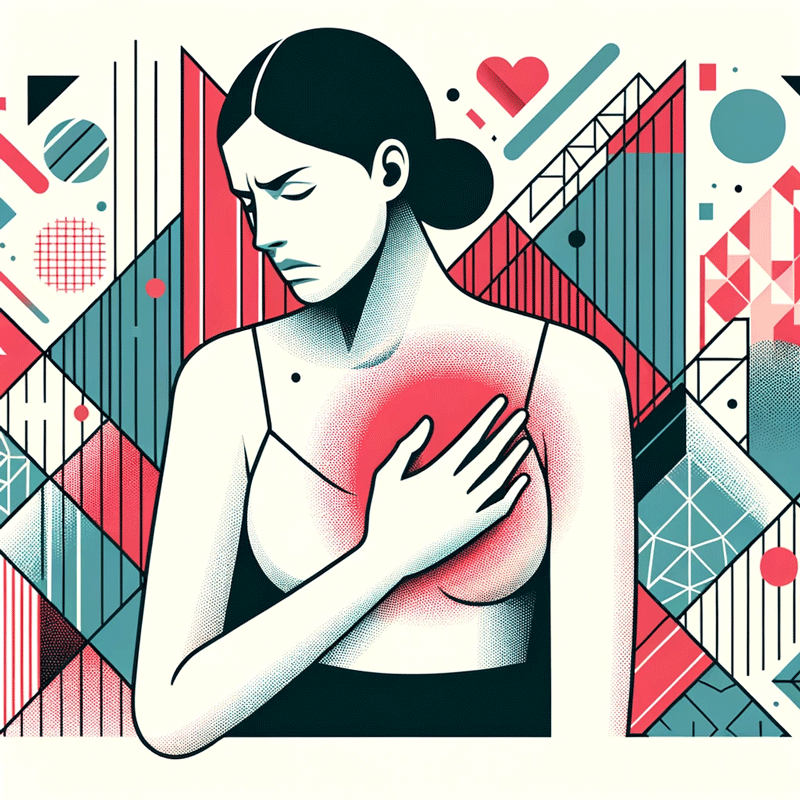
Sore Breasts in Perimenopause & HRT: Iodine to the Rescue
Sore, swollen breasts in early perimenopause often come down to low iodine leaving breast tissue over-reactive to oestrogen — not a shortage of oestrogen to top up with HRT.
-
Later menopause, hormone therapy tied to hearing loss
It was once thought that hearing loss in older women might be linked to loss of estrogen and progesterone following menopause and that hormone therapy might reduce that risk. Recent…
-
Why HRT is not working and what you are missing
If you are on HRT and still not yourself — the flushes quieter, but the fog, the flatness and the fatigue still there — the answer may not be your…