What’s New in Osteoporosis


  • While osteoporosis and psychological stress occur via differing mechanisms, there are several potential molecular links that exist between a pathological response to stress and the development of bone disease. Although not a comprehensive list, these…


  • Excess glucocorticoids are well recognised as a cause of osteoporosis; they inhibit osteoblast function and increase osteoblast and osteocyte apoptosis resulting in thinning of the trabeculae. The circadian rhythm of bone turnover, which is linked…


  • Osteoporosis, a consequence of menopause in the biological cycle of women, emerges with the conclusion of reproductive capabi lities.Hormonal changes during this phase contribute to the development of the disease. The study evaluated the relationship…


  • The purpose of this study was to determine the longitudinal association between menopausal vasomotor symptoms (VMS) and urinary N-telopeptide level (NTX) according to menopausal stage. We conclude that among early perimenopausal and late perimenopausal women, those…


  • Objective: To determine whether women with vasomotor symptoms (VMS) have lower bone mineral density (BMD) than women without VMS. Design We analyzed data from baseline to annual follow-up visit 5 for 2213 participants in the…


  • Loss of estrogen results in reduced osteoblast mediated bone formation and enhanced osteoclastic resorption (Emmanuelle et al., 2021). Given the recent expansion of interest in understanding how these cellular processes are regulated via metabolic flux and bioenergetic…


  • Background: Osteocalcin, has high affinity for calcium. In osteoporotic women, deficiency of calcium may lead to lowering of the formation of hydroxyapatite crystals. Thus, in the state of hypo mineralization, free osteocalcin available in the circulation.…


  • Surprisingly little if any attention has been given to the role of copper in the aetiology of postmenopausal osteoporosis. For example, Freudenheim et al. (40). investigated relationships between usual intake of energy and 14 nutrients…


  • Skin and bone are built from the same collagen and make their own oestrogen the same way — so as that local supply runs short in later perimenopause, deeper wrinkles and thinning bone are often…

From my Substack

I write regularly about menopause, symptoms, biology, and the wider story women are so often not told. Some of the articles will be part of my book. If you want to go deeper into the thinking behind my work, you can start here.

The Ultimate Guide to Perimenopause and Menopause: Making Sense of the Chaos
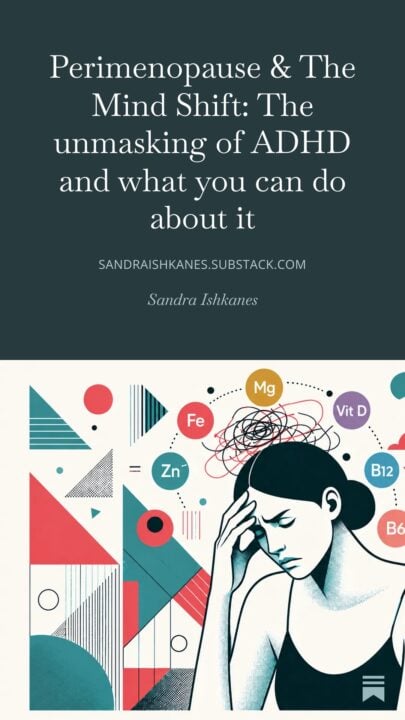
Perimenopause and the ADHD Shift

Book a discovery call and in 30 minutes you can:

30 minutes · Free · No obligation

Not ready to book? Follow my thinking on Substack


Sandra Ishkanes  Natural Menopause Specialist based in Brighton, serving clients worldwide via Online Consultations   
BSc Molecular Biology (King’s College London) | DipION | Functional Medicine Practitioner
Registered member, Association of Naturopathic Practitioners (ANP) – the UK professional body for accredited naturopathic and functional medicine practitioners. ANP members hold accredited qualifications, carry professional indemnity insurance, and follow a strict code of ethics.

© 2026 Sandra Ishkanes  ·  sandraishkanes.co.uk

Approach  ·  Work With Me  ·  Case Studies  ·  Meet Sandra  ·  Writing  ·  Book a Discovery Call

The information provided on this website is for educational and informational purposes only and is not intended as medical advice, diagnosis, or treatment. Sandra Ishkanes is a Functional Medicine Practitioner and Molecular Biologist, not a medical doctor. Always seek the advice of your GP or other qualified healthcare provider with any questions you may have regarding a medical condition or before making any changes to your diet, lifestyle, or supplement regimen—especially if you are currently taking prescription medication or HRT. Never disregard professional medical advice or delay in seeking it because of something you have read on this website.