What’s New in Sleep


  • This study followed 122 late peri‑ and postmenopausal women (average age 59) to see how their sleep relates to early brain changes that raise the risk of stroke and dementia. Each woman wore a sleep‑tracking…


  • Researchers found key differences in inflammation and blood sugar levels after eating in post-menopausal versus pre-menopausal women. The unfavourable effect of menopause on blood sugar control, which is a key risk factor for cardiovascular disease…


  • Chronic insomnia disorder is one of the most common problems in postmenopausal women, exacerbated by underdiagnosis and improper treatment. This double-blinded, randomised, placebo-controlled trial was conducted to evaluate the potential of vitamin E to treat…


  • Reduced levels of oestrogen and progesterone seem to be what makes post-menopausal women more likely to have symptoms of sleep apnoea, including snoring, irregular breathing or gasping at night. Middle-aged women who have lower levels…


  • ‘I look at the clock… it’s 3am’: Why can’t women sleep? …A new book from the US … appears at first glance to be more of a feminist manifesto for Generation Xers than a self-help…

Get Better Now

The deficiency is not in you. It’s in the medical model.

Mainstream medicine is still working with a 1950s framework — one that treats oestrogen deficiency as the root cause of everything you’re feeling, which is why HRT makes sense for them. But there is one powerful dissenting voice.

Dr Nanette Santoro is a menopause scientist elected to the US National Academy of Medicine and chair at the University of Colorado School of Medicine. As lead investigator on the Study of Women’s Health Across the Nation (SWAN), she has followed more than 3,000 women aged 42–54 since the mid-1990s to understand the menopause transition and its consequences on women’s health. She has concluded that:

Women need a sophisticated understanding of the root cause of symptoms and health risks – otherwise they will forever be stuck with an oversimplified model that blames low oestrogen for everything.

Dr Nanette Santoro, lead investigator SWAN

In the last decade, the science of menopause has moved significantly. We now understand that symptoms are driven by far more than oestrogen decline — by metabolic shifts, nervous system load, inflammation, and the conditions in which this transition has to happen. Dr Santoro is clear: symptoms cluster together — hot flushes, brain fog, low mood, and broken sleep don’t arrive randomly. They share root causes. Which means they can be addressed at the root. My practice is built on that research.

If you’ve been told your symptoms are just low oestrogen — or that HRT is your only option — there is another way. It doesn’t matter where you are with HRT. The work is the same: your biology, your root causes, your protocol.

The discovery call is free, 30 minutes, and no obligation. Let’s have that conversation.

From my Substack

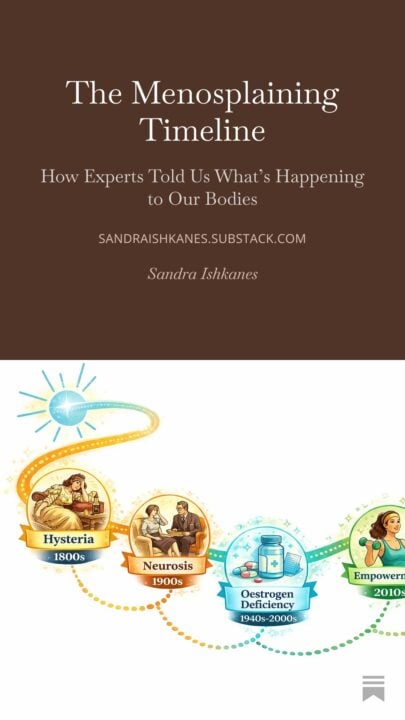
I write regularly about menopause, symptoms, biology, and the wider story women are so often not told. Some of the articles will be part of my book. If you want to go deeper into the thinking behind my work, you can start here.

Book a discovery call and in 30 minutes you can:

30 minutes · Free · No obligation

Not ready to book? Follow my thinking on Substack


As featured in

Sandra Ishkanes  Natural Menopause Specialist based in Brighton, serving clients worldwide via Online Consultations   
BSc Molecular Biology (King’s College London) | DipION | Functional Medicine Practitioner
Registered member, Association of Naturopathic Practitioners (ANP) – the UK professional body for accredited naturopathic and functional medicine practitioners. ANP members hold accredited qualifications, carry professional indemnity insurance, and follow a strict code of ethics.

© 2026 Sandra Ishkanes  ·  sandraishkanes.co.uk

Consultations  ·  Quiz  · Case Studies  ·  Meet Sandra  ·  Writing  ·  Book a Discovery Call

The information provided on this website is for educational and informational purposes only and is not intended as medical advice, diagnosis, or treatment. Sandra Ishkanes is a Functional Medicine Practitioner and Molecular Biologist, not a medical doctor. Always seek the advice of your GP or other qualified healthcare provider with any questions you may have regarding a medical condition or before making any changes to your diet, lifestyle, or supplement regimen—especially if you are currently taking prescription medication or HRT. Never disregard professional medical advice or delay in seeking it because of something you have read on this website.